Abstract
This case study focuses on the replacement of the bottom plate of a urea solution tank at Ca Mau Fertilizer Plant following a leak discovered in 2016. The investigation determined that leakage was caused by corrosion and cracking resulting from poor quality of sand beneath the tank and inadequate sealing method used to prevent ingress of rainwater between the tank bottom and the foundation. The tank, constructed with A240 304L stainless steel, exhibited localized corrosion and cracks on the outer surface of the bottom plate, where it came into contact with the sand. Notably, no corrosion was detected on the internal surface where the plate contact with the urea solution.
Failure analysis identified sulfur (S) and chloride (Cl-) impurities present in the sand as the cause of corrosion. To rectify the issue, the repair solution involved replacing the bottom plate with a new 304L stainless steel plate and completely replacing the sand layer.
Introduction
The urea solution tank is a storage tank for 75% urea solution, operating at a temperature of 104°C. The tank has a diameter of 13.8m and a height of 9.2m. The bottom portion of the tank is constructed using A240 304L stainless steel. The tank is installed on a concrete foundation, with a layer of sand acting as an intermediate cushion between the concrete and the tank’s bottom. The general drawing and design information of the tank are provided in Figure 1 and Table 1.
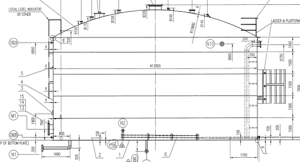
Fig. 1. General drawing of tank
DESIGN DATA | |
Design pressure (MPa) | Full liquid + 0.0172 |
Working pressure (MPa) | atm |
Design temperature (0C) | 165 |
Working temperature (0C) | 104 |
Fluid | Urea solution 75% wt |
Construction material | 304L |
Name of equipment | Urea solution tank – T06101 |
Table 1. Design data
Description of Damage
A leak was discovered beneath the concrete foundation of the tank, as shown in Figure 2. An internal inspection was conducted in TA 2016, which included a vacuum test revealing the presence of pinholes. Samples of the bottom plate in the pinhole area and the sand were collected for further failure analysis. Preliminary inspection of the sample indicated localized corrosion and cracks on the bottom plate, primarily on the outer surface where it was in contact with the sand (Figure 4). No signs of corrosion were observed on the internal surface of the bottom plate, where it was in contact with the urea solution (Figure 4). The sand was found to be wet.
Fig. 2. Leak in the tank’s bottom plate |
Fig. 3. Sand underneath the tank |
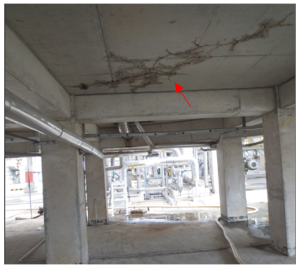
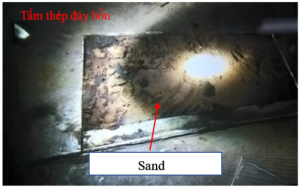
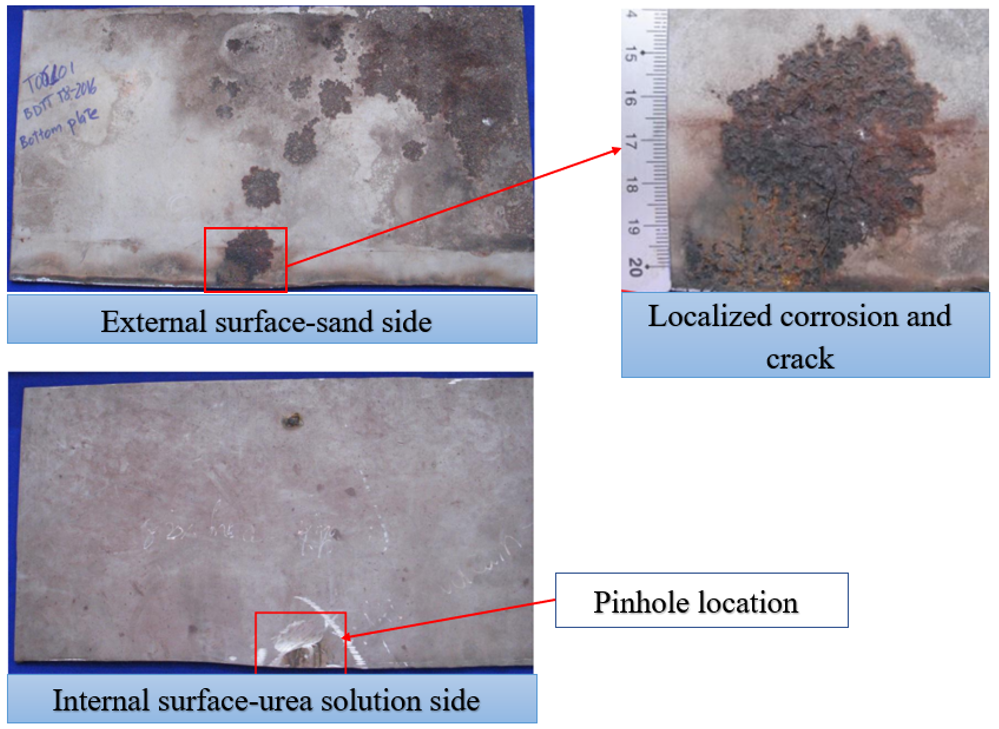
Fig. 4. Corrosion sample
Failure analysis
A failure analysis was conducted to determine the root cause of the corrosion. The analysis revealed the following key findings:
- The bottom plate’s surface in contact with the sand exhibited localized corrosion and cracking, while the surface in contact with the urea solution remained clean without corrosion signs (Figure 4).
- The chemical composition of the T06101 tank’s bottom plate was consistent with A240 304L stainless steel.
- Microstructure examination was performed at three locations:
- Sample 1 showed a combination of austenite and delta ferrite. Surrounding the primary crack, there were indications of branched, transgranular cracks. The cracks originated from the sand side and propagated towards the urea solution side (Figure 5).
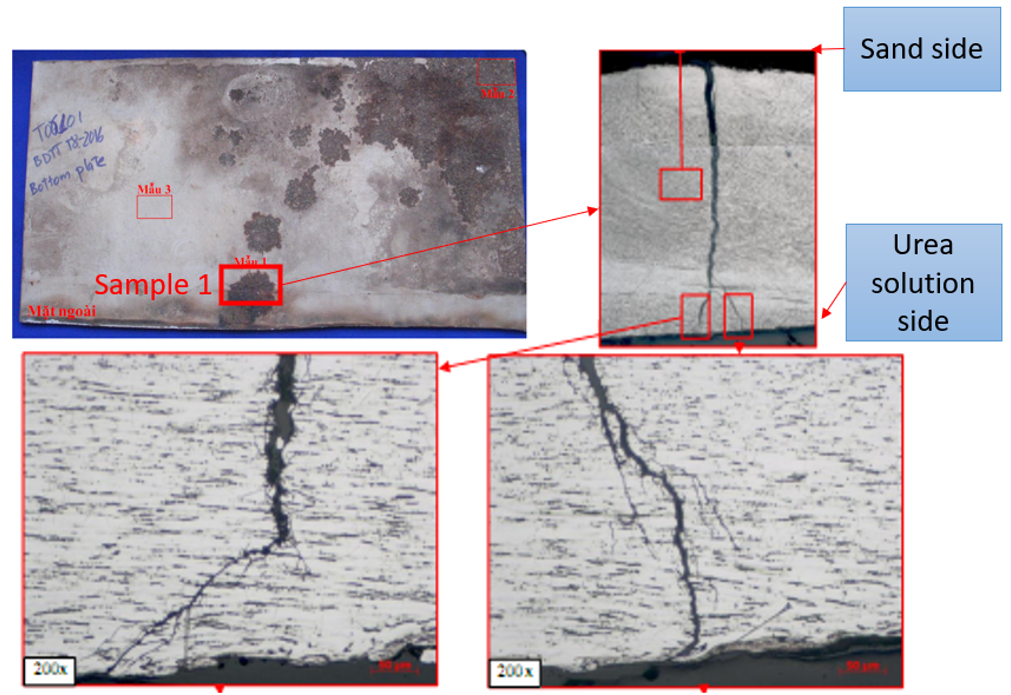
Fig. 5. Microstructure examination of sample 1 – leak location
- Microstructure examination of sample 2 revealed a composition of austenite and delta ferrite. Localized corrosion were observed, no cracks were found (Figure 6).
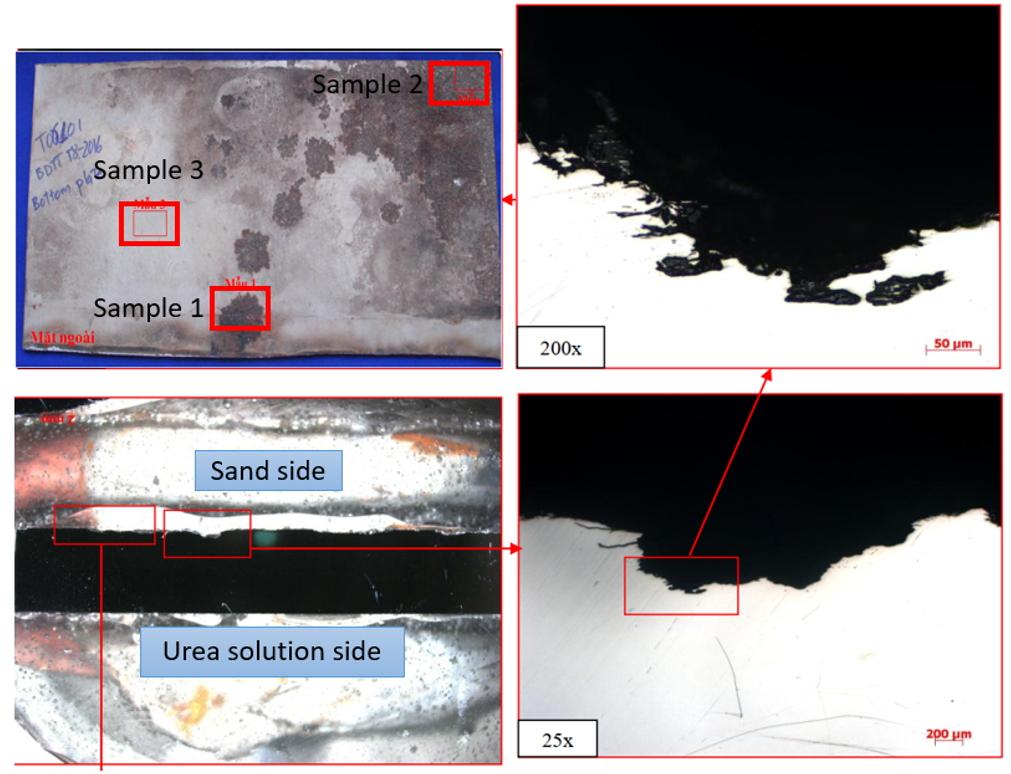
Fig. 6. Microstructure examination of sample 2 – corrosion location
- Microstructure examination of sample 3 also showed a composition of austenite and delta ferrite. No cracks or corrosion were observed.
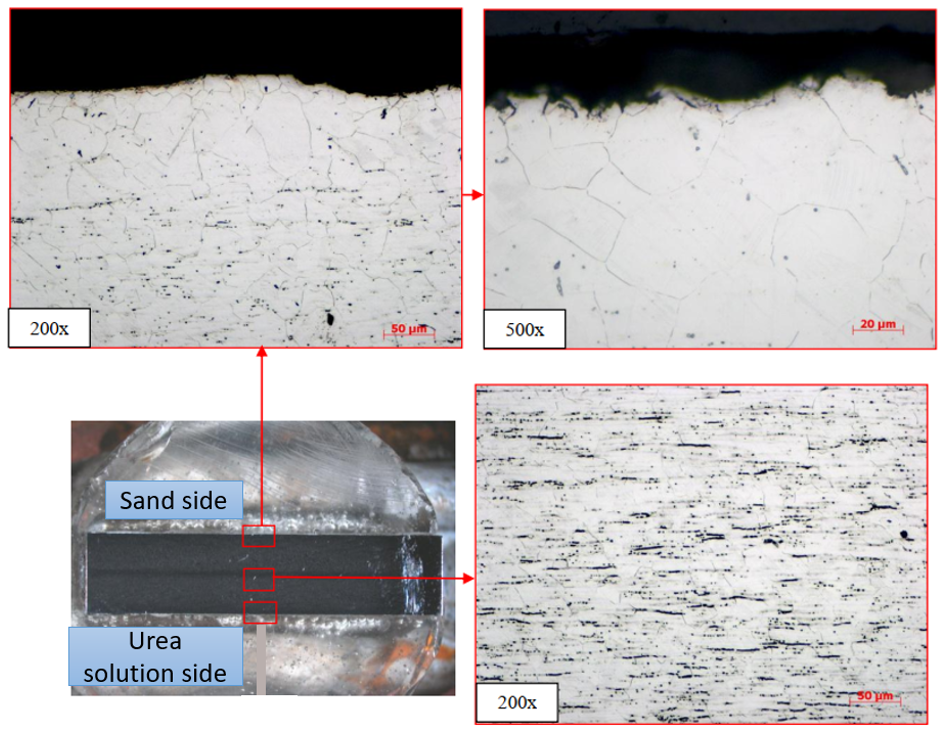
Fig. 7. Microstructure examination of sample 3 – non-corrosion location
- The analysis of the corrosion product using energy-dispersive X-ray spectroscopy (EDX) indicated the presence of chloride (Cl-) in sample 1, which is a corrosive agent for stainless steel (Table 2). The corrosion product also contained sulfur (S) and chloride (Cl-) in sample 2, which is also a corrosive agent for stainless steel (Table 3).

Table 2. composion of corrosion product on sample 1
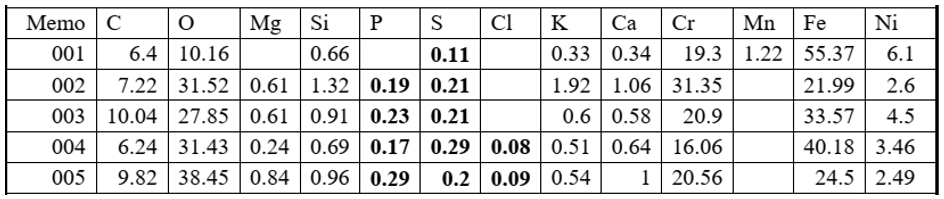
Table 3. Composion of corrosion product on sample 2
- Chemical composition analysis of the sand sample beneath the tank’s bottom plate revealed the presence of sulfur (S) and chloride (Cl-) elements, which are known to be corrosive to the stainless steel (table 4).

Table 4. composion of sand under the bottom plate of tank
Cause of Damage:
Based on the findings from the failure analysis, the bottom plate of tank was damaged due to contact with a sand layer containing corrosive sulfur (SOx) and chloride (Cl-) impurities.
The source of sulfur (possibly in the form of SOx) and chloride can be from one or a combination of the following factors:
- Poor quality of sand used during the tank installation, with high levels of Cl- content.
- Inadequate sealing of the contact area between the tank’s bottom plate and the concrete foundation, leading to the ingress of rainwater (containing Cl- and SOx) into the sand layer at the bottom of the tank.
Repair
Based on the failure analysis findings, the following repair solution was implemented to restore the integrity of the tank and provide a solution to prevent recurring damage. The repair solution are as follows:
- The damaged bottom plate was replaced with a new 304L stainless steel plate, following the original specifications.
- The entire sand layer was replaced to eliminate the presence of corrosive impurities. The sand should have a pH of 7-8 and chloride (Cl-) content of less than 25ppm.
- Repairing the concrete layer that has been penetrated by urea solution.
- Measures was taken to prevent ingress of rainwater into the sand layer at the bottom of the tank.
The main steps of the repair work are as follow:
- Preparation for lifting the tank.
- Weld steel plates to the shell around the tank to serve as lifting points and install hydraulic jacks to prepare for lifting the tank (Figure 8).
- Cut all anchor bars holding the tank.
- Temporarily remove all internal components, such as pipes, pipe supports inside the tank, and temporarily secure them inside the tank.
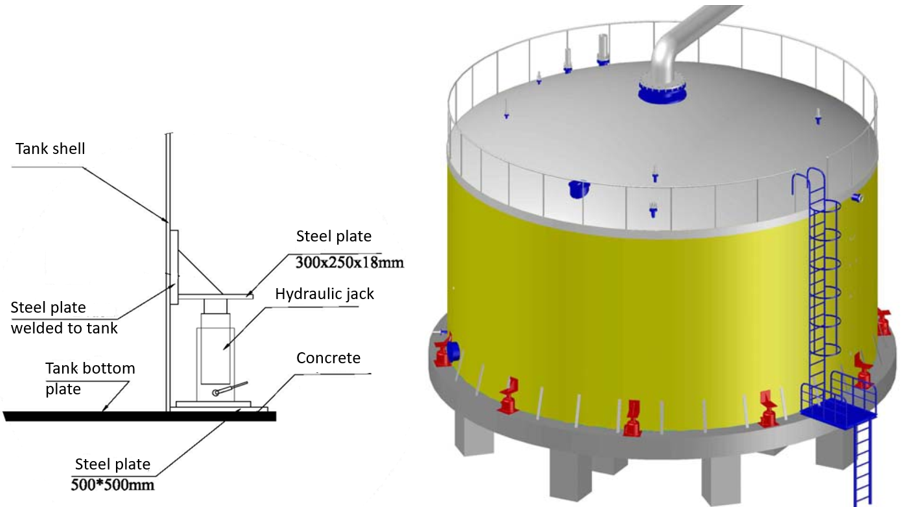
Fig. 8. Installation of hydraulic jack around the tank
- Lifting the tank.
- Use hydraulic jacks to raise the entire tank to a height of 50mm above its original position.
- Place wooden supports around the tank bottom to secure it in place.
- Removal of old bottom plate and sand.
- The damaged bottom plate was cut and removed from the tank.
- The old sand layer was completely removed.
- Repairing the concrete foundation.
- Installation of new sand.
- A new layer of sand was installed as an intermediate cushion between the concrete and the new bottom plate
- Welding the new bottom plate.
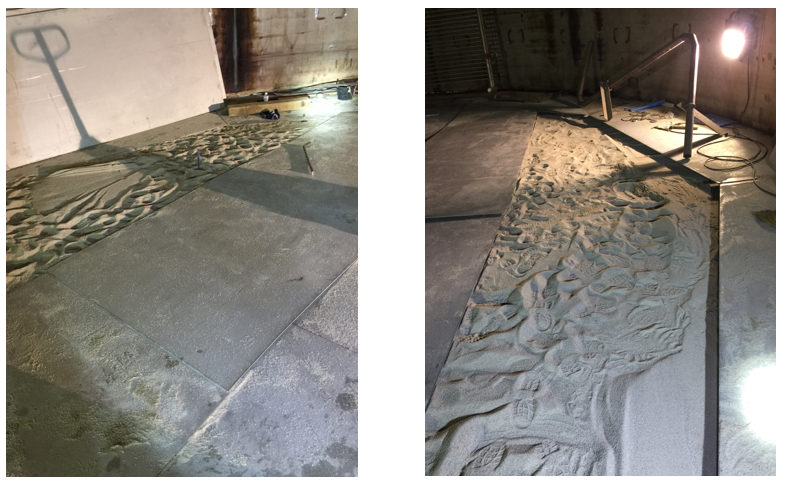 Fig. 9. Replacement with new sand and bottom plate
- Performing NDT (Non-Destructive Testing) and vacuum testing after completing the welding.
- Weld a drip ring to the tank bottom to prevent ingress of water into the tank bottom, as shown in Figure 10.
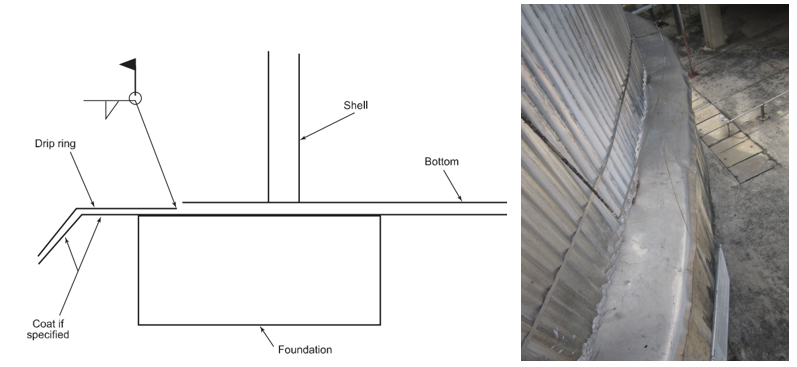
Fig. 10. Welding of the drip ring to the bottom plate
Conclusions
This case study investigated the failure of a urea solution tank’s bottom plate due to corrosion and cracking resulting from poor quality sand beneath the tank and inadequate sealing methods. The tank exhibited localized corrosion and cracks on the outer surface of the bottom plate in contact with the sand, while the internal surface in contact with the urea solution remained unaffected.
Failure analysis identified sulfur (S) and chloride (Cl-) impurities present in the sand as the primary cause of corrosion. To address the issue, the repair solution involved replacing the damaged bottom plate with a new 304L stainless steel plate and completely replacing the sand layer. Additionally, measures were taken to repair the concrete foundation and prevent the ingress of rainwater containing corrosive elements into the sand layer.
Through the implementation of these repair measures, the integrity of the urea solution tank was successfully restored, mitigating the risk of corrosion-related failures and leaks. The replacement of the bottom plate and the removal of corrosive impurities in the sand layer ensured the long-term reliability and functionality of the tank. Furthermore, the repair process and preventive measures taken will help prevent future damage and maintain the tank’s performance.
This case study highlights the importance of considering the quality of materials and effective sealing methods during the installation of tanks to prevent corrosion issues. It also emphasizes the significance of conducting thorough failure analysis to accurately identify the root causes of failures.